⁉️

I was contracted to lead an open initiative to streamline the iterative design workflow as OpenSearch, a data analytics suite, was branching off from AWS. The team that had been working on the AWS integration would be split in two and for a period of time, were responsible for building the same features across two distinct design systems with unique interaction patterns. Their workflow was bulky, inefficient and was about to be a huge barrier.
I conducted a heuristic evaluation, interviews and created an ecosystem map to document friction and painpoints as the design team was under pressure to build an entirely new design language. I created a new set of wireframing tools in Figma based on the brands design system, published an annotated library and onboarded multiple teams.The success of this project led to my full-time role as a production designer, built around using and improving these wireframing tools to support the largest design effort the team had undertaken to date. As of my departure from AWS, nearly 100 teams have successfully integrated this workflow into their design and review process. This role allowed me to work closely with principle designers that managed the AWS design system and teach internal seminars on Figma best practices. Segueing into my full-time role as design support for the OpenSearch team, I used these resources to build a functional high-fidelity design system library specific to our team, starting the trend within the Data and Analytics organization to lean into smaller and more flexible asset libraries.
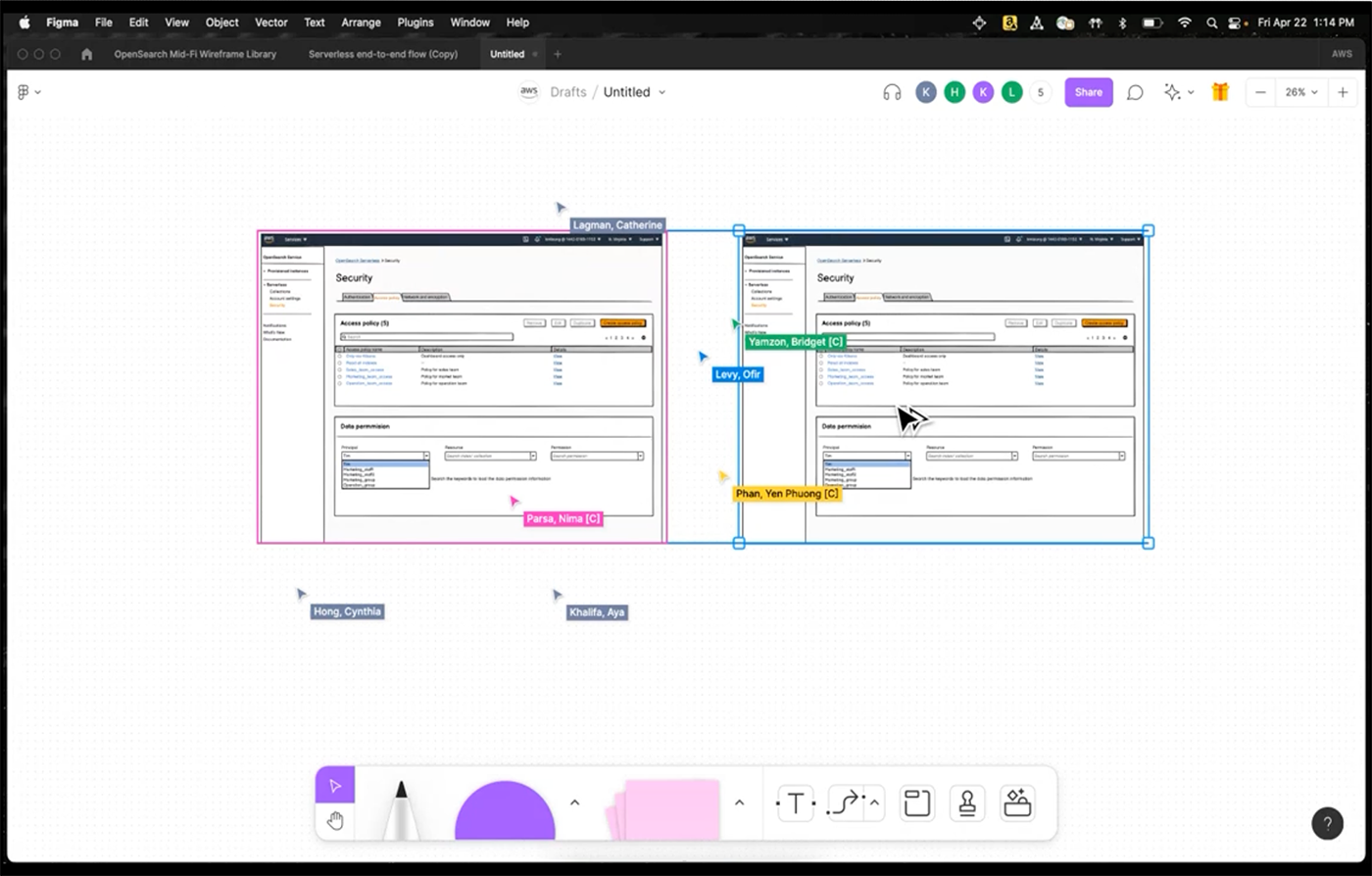
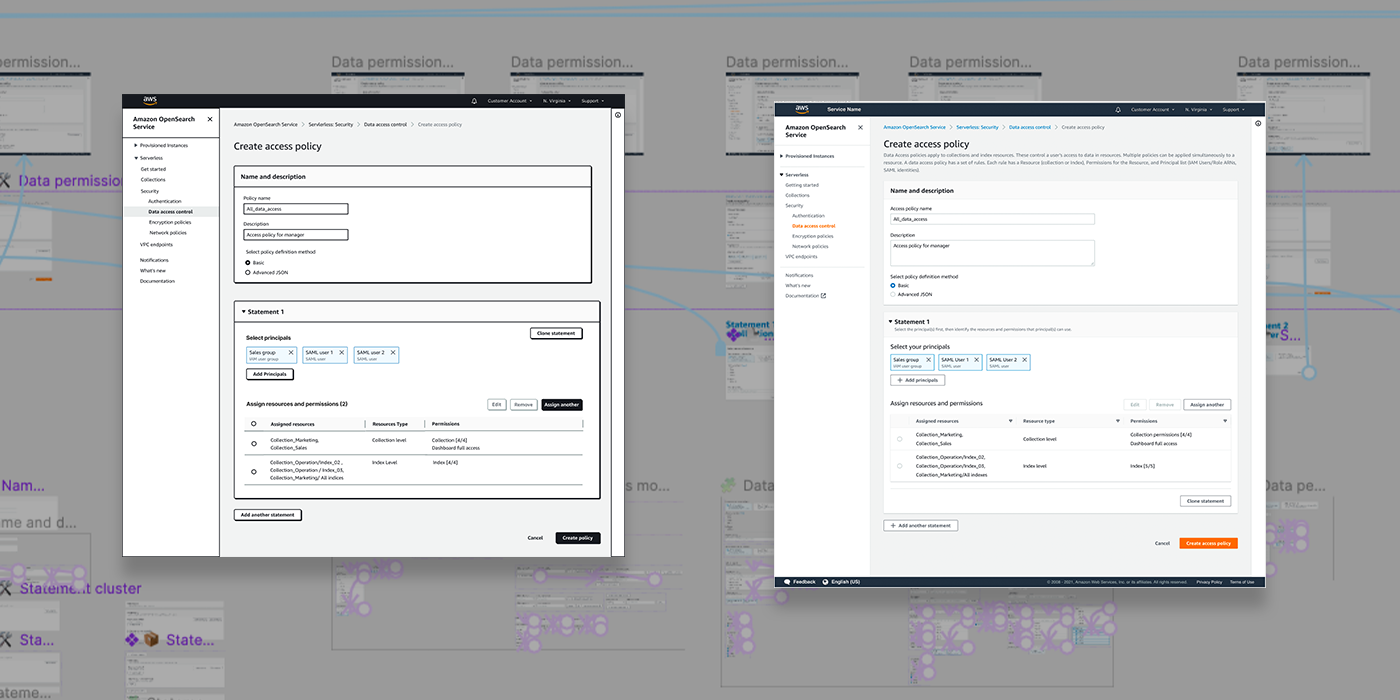
The evolution from my simple low-fi wireframing sticker-sheet to service-oriented interactive libraries made prototyping at all levels of fidelity a breeze.
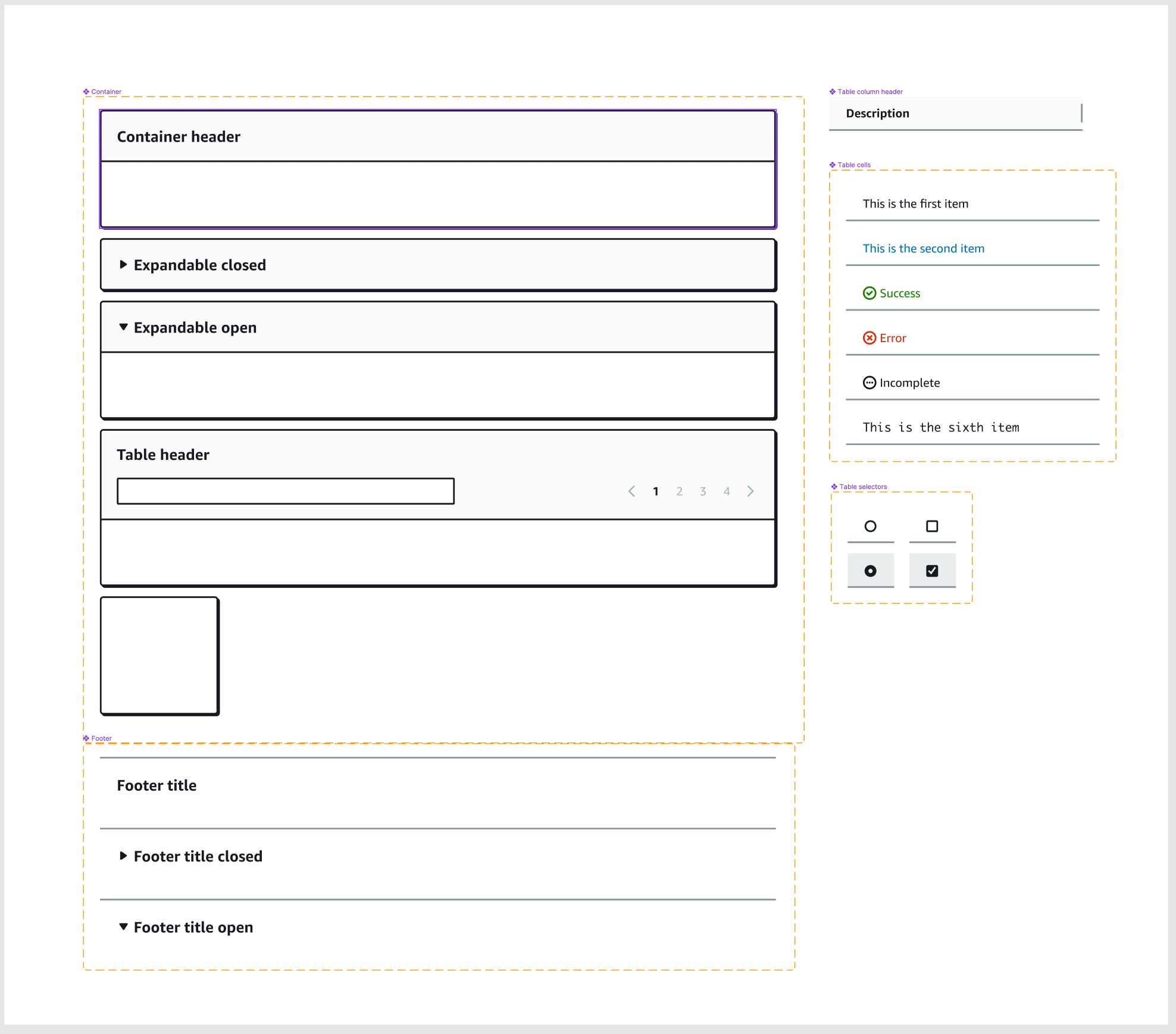
I optimized a Figma asset library for use in FigJam, it's lower fidelity sibling. This amounted to a sticker-sheet, where the only interactions designers could use were drag and drop and duplicate, using a pared down collection based on the functionality of our service.
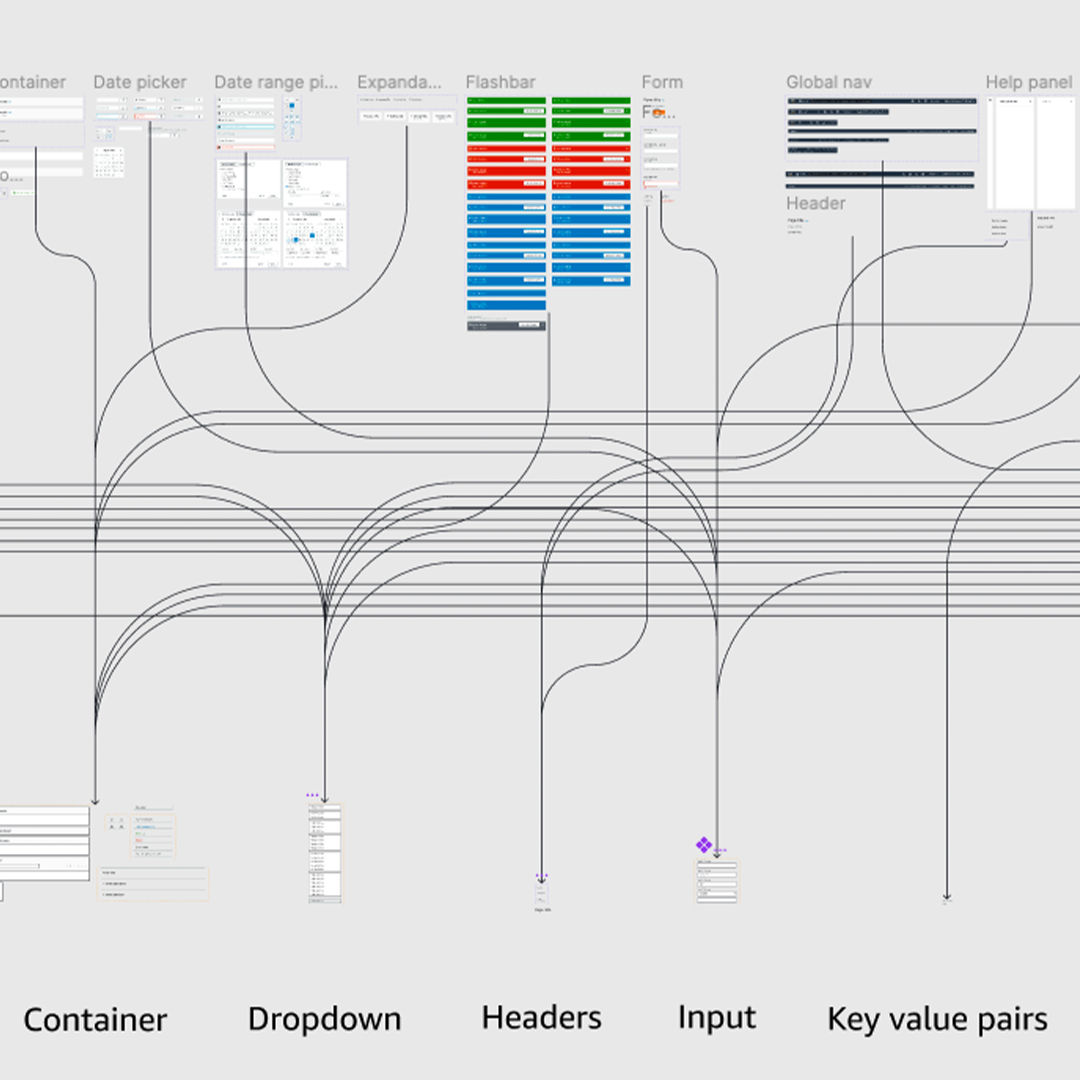
In comparison to the design system which contained nearly 1000 components and variants, the sticker sheet was made up of 26 components for faster iteration in the early stages of design and concepting.
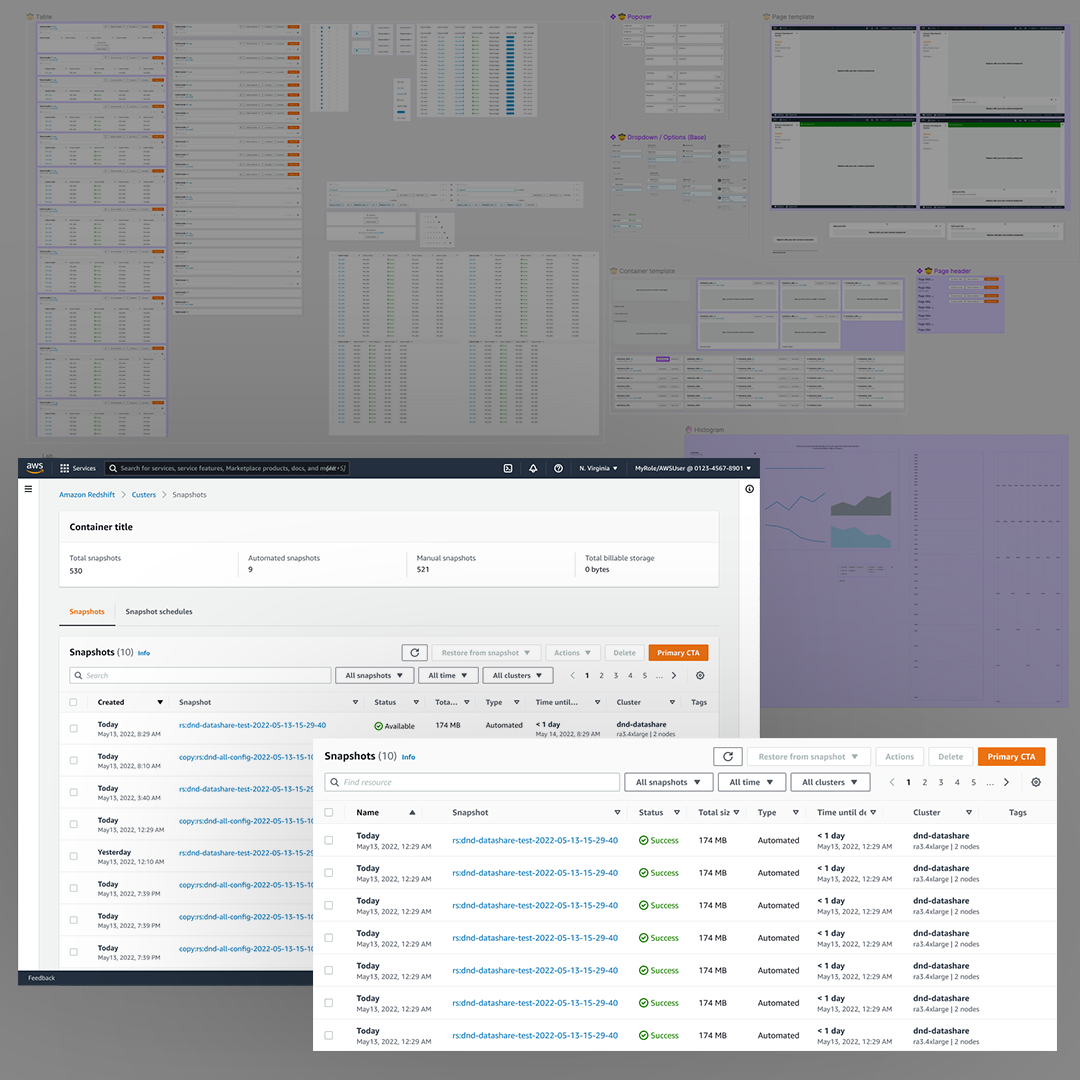
By the time my service oriented interactive library was finished, designers from teams all across the org were using it to speed up their own workflows. This image from a 1 on 1 shows identical tables from a prototype. The one at left took another designer nearly two hours to build manually, while the one at right we did together from the ground up in 20 minutes.
Based in Seattle, WA