⁉️

Speculative design for my BFA thesis.
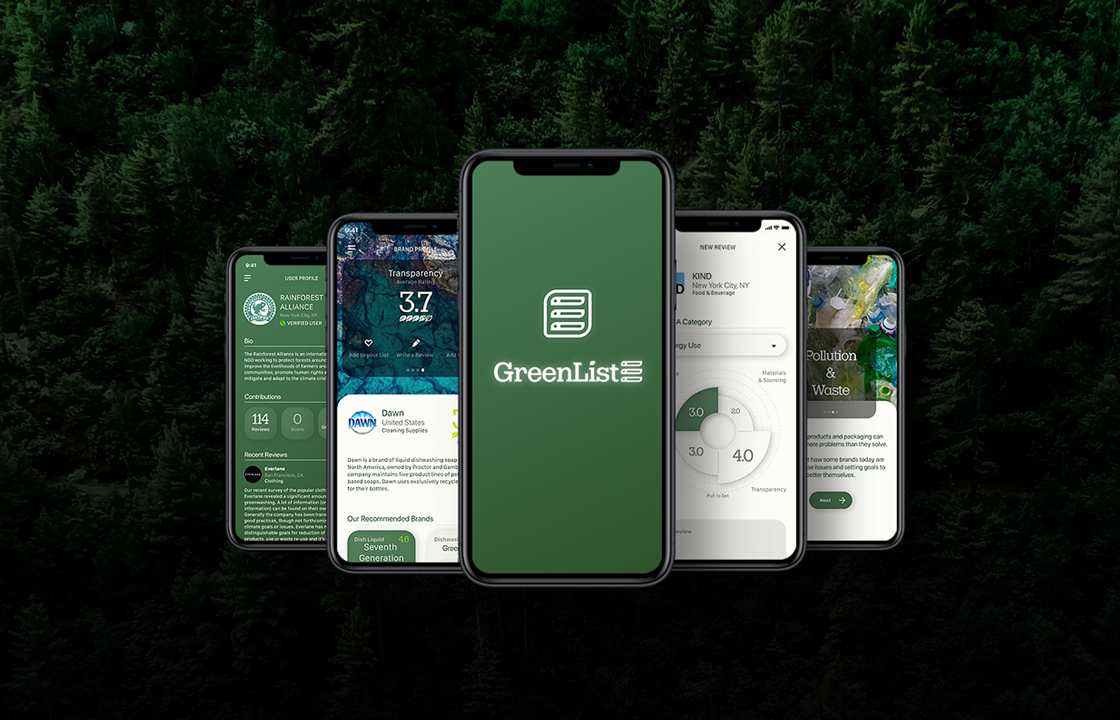
Greenlist is an e-commerce companion app that helps users make decisions while shopping that are more intentional. With a focus on the environmental impact that different brands have on the planet, GreenList also helps you crowd-source what you know from other users, NGO’s, non-profits and other resources. Set your intentions, build your green list, and GreenList will help you find products that match your expectations so you can shop in line with your values.
Many consumers try to make a positive impact through their shopping habits, which often includes buying reusable products made from recycled materials and clean energy sources. I needed an app I could count on to help me navigate the truths and lies of earth-first marketing, to see through the smog and find out which company is making a positive impact and which uses “green-washing” to fake it.


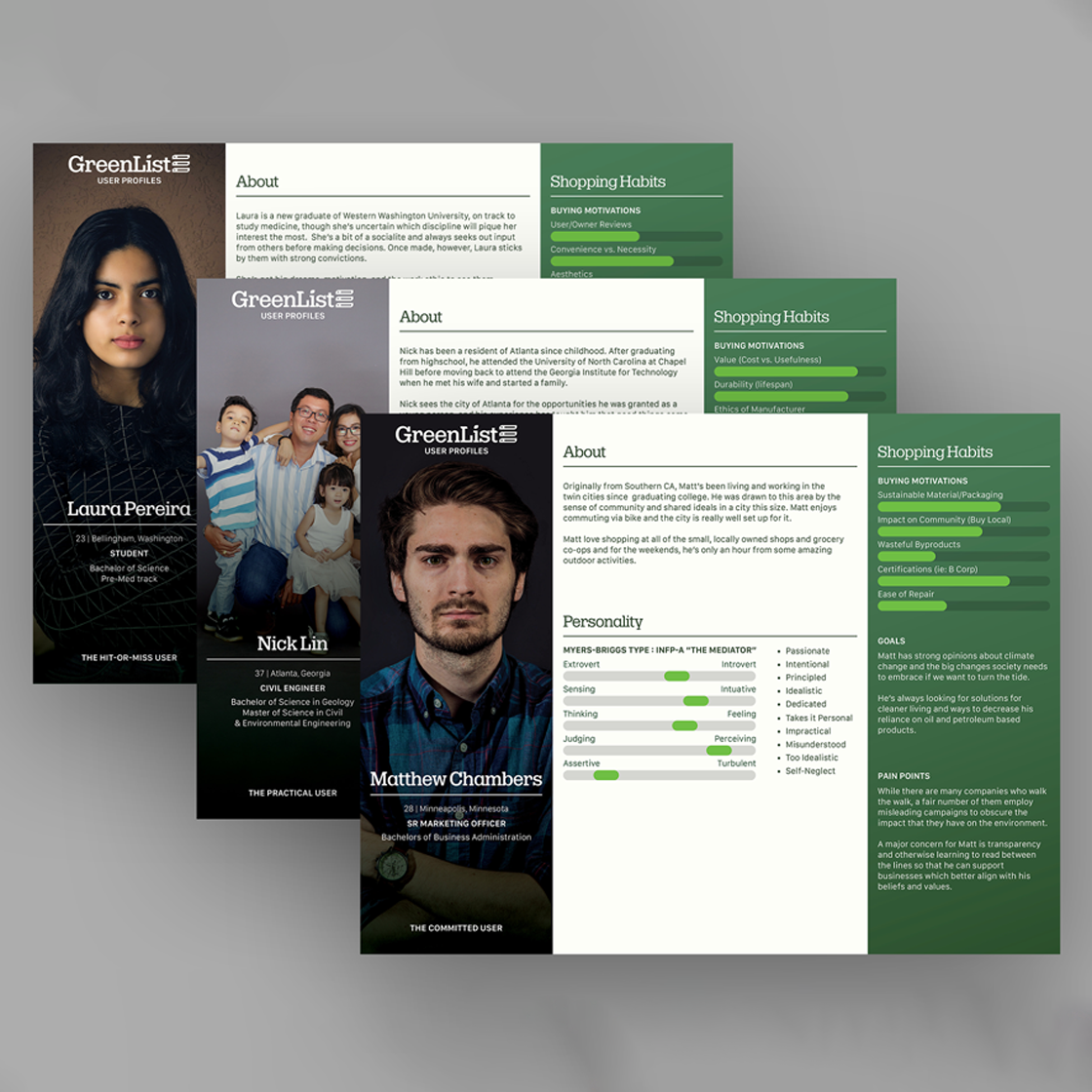
Using polling within my community, I developed user profiles to better understand the form and core features of the user experience. Paper concept maps and other low-fi UX tools helped the initial structure to take form, which would be refined with qualitative user testing, observation and further polling.

An exploded view of the main UI for a product page.
The current aggregated ratings for a company can be seen at the top, as well as on a histogram to consider trends. The ratings are based on a company’s energy use, materials and sourcing, pollution and waste, and transparency of practices. After an overview of the company, GreenList recommends similar products that are rated higher by its community of users followed by recent reviews and an interactive map for finding the products locally.


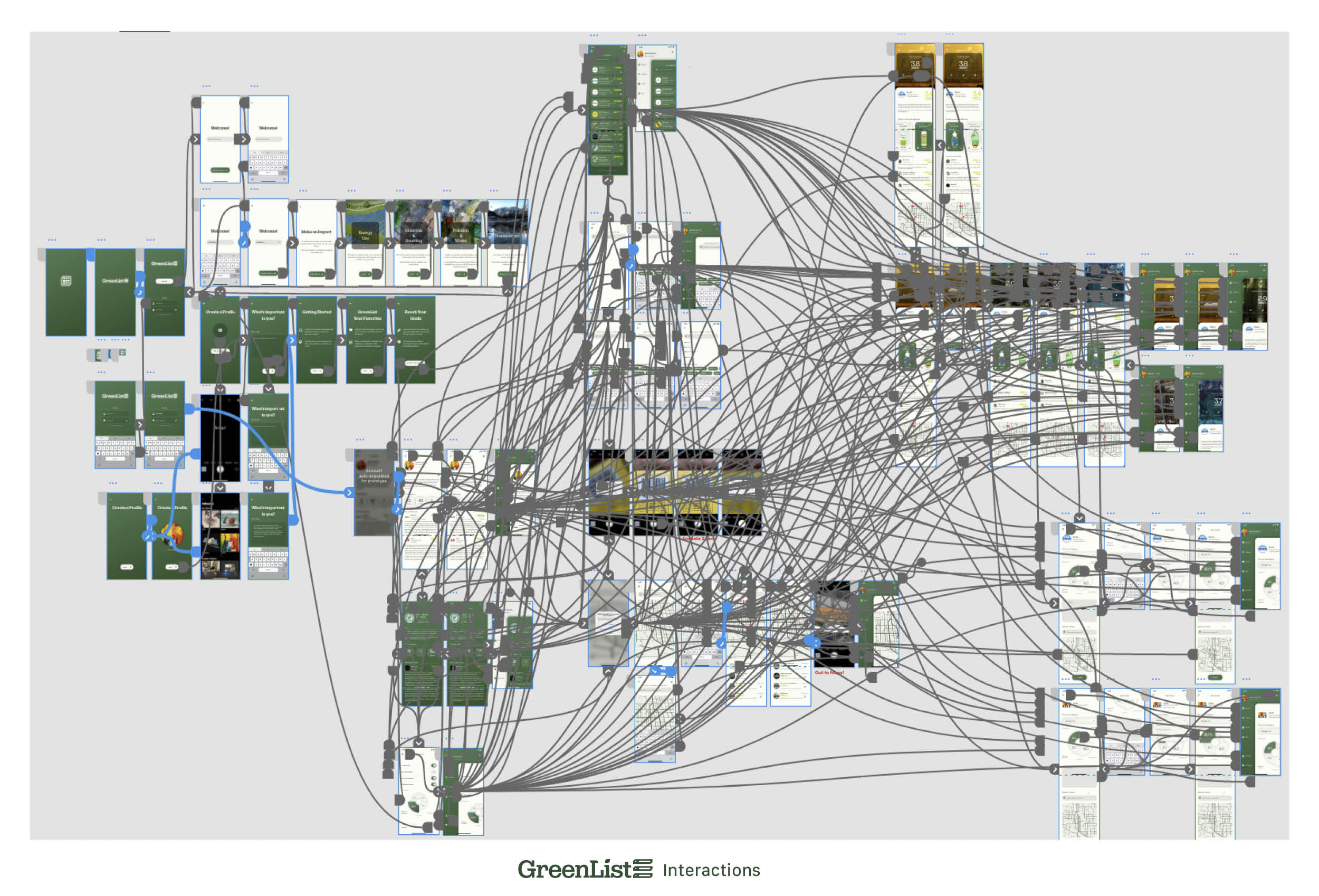
The touch-points in the live prototype provide alternate views of potential user flows. A robust on-boarding process (at left) shows both the why and the how of the app, but allows users to choose what they want to learn about now or later.
Based in Seattle, WA